Request Sent a Appointment
Speciality
Stress Test / TMT
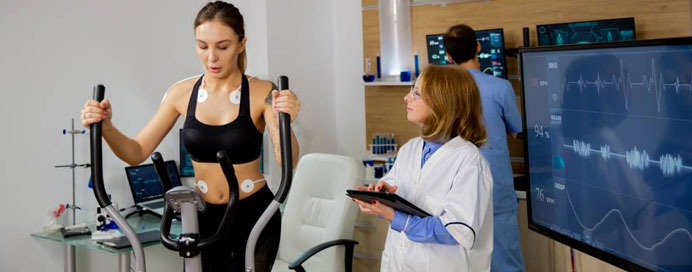
A Stress Test, also called a TMT (Treadmill Test), is a specialized diagnostic test used to assess how the heart responds to physical exertion. While at rest, many heart problems may not be noticeable, but exercise increases the heart’s workload and oxygen demand, which can reveal hidden issues. In this test, the patient walks on a treadmill where the speed and incline are gradually increased to simulate physical stress, while continuous ECG (electrocardiogram), blood pressure, heart rate, and symptoms are monitored.
The TMT is primarily used to detect coronary artery disease (CAD) by identifying reduced blood flow to the heart muscle (ischemia) that may occur during exertion. It also helps in diagnosing exercise-induced arrhythmias, evaluating chest pain, breathlessness, unexplained palpitations, assessing exercise capacity, and monitoring the effectiveness of cardiac treatments or procedures like angioplasty or bypass surgery.
The procedure usually lasts about 15–30 minutes. Small electrodes are attached to the chest to record the ECG, and the patient is asked to walk until a target heart rate is achieved or until symptoms appear. The test is generally safe, though some patients may experience fatigue, dizziness, chest discomfort, or breathlessness, which are carefully monitored by the supervising doctor.