Request Sent a Appointment
Services
Portable Digital X-ray
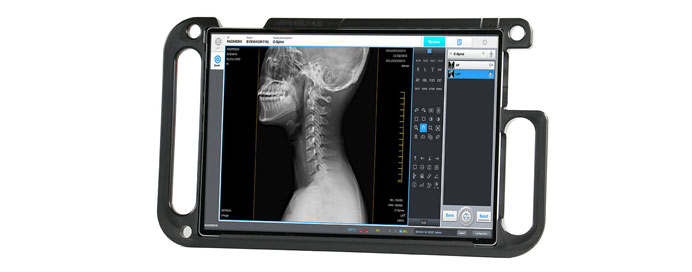
Portable Digital X-ray is an advanced imaging system that allows X-ray examinations to be performed at the patient’s location, such as in hospital wards, intensive care units (ICUs), emergency rooms, or even at home. Unlike conventional X-ray machines that require patients to visit a radiology department, portable digital X-ray units are compact, mobile, and equipped with digital detectors, enabling immediate, high-quality imaging. This makes them especially valuable for patients who are critically ill, immobile, or in remote areas.
How It Works
A mobile X-ray unit is brought to the patient’s bedside or location.
The machine generates X-rays that pass through the body and are captured by a digital detector (flat-panel or computed radiography plate).
The image is processed instantly and displayed on a screen.
Results can be stored electronically and shared with doctors in real time.
Clinical Applications
Critical Care & ICU: Bedside chest X-rays to check for pneumonia, fluid in lungs, ventilator placement, or catheter positioning.
Emergency & Trauma Care: Rapid evaluation of fractures, internal injuries, or chest conditions without moving unstable patients.
Orthopedics: Imaging fractures, spine alignment, or joint replacements directly in wards or operation theatres.
Home Healthcare: Used for bedridden, elderly, or disabled patients who cannot travel to hospitals.
Infectious Diseases: Reduces the need to transport contagious patients, limiting infection spread (e.g., TB, COVID-19).
Advantages
Bedside convenience – no need to move critically ill or immobile patients.
Immediate results – digital images available within seconds.
Lower radiation dose compared to traditional film X-rays.
Easy storage & sharing – images can be sent digitally for expert opinions.
Improved patient safety – reduces risk during transport of unstable patients.